

The storm has passed, the skies have cleared, and the wind has calmed. You step outside, look up at your home, and everything appears to be fine—no missing shingles, no branches on the roof, and no visible signs of damage.
So here is the question worth asking before you relax: can wind damage a roof without leaving visible signs? The honest answer is yes, and it happens far more often than most homeowners expect. At Victory Roofing, a local, family-owned roofing company in Pooler serving Savannah and the surrounding Coastal Empire, we regularly inspect roofs that looked perfectly fine from the driveway but had hidden wind damage that later turned into leaks, stained ceilings, and expensive repairs.
This guide explains how hidden wind damage happens, which warning signs to watch for, and what to do after a storm. Hurricane season runs through November 30 and typically peaks between August and October, so the timing matters right now.
Why Can Wind Damage a Roof Without Leaving Visible Signs?
Asphalt shingles overlap in layers and are held down by nails and a factory-applied adhesive strip that bonds each shingle to the one below it. That seal keeps wind from getting underneath. When a strong gust hits, air rushes over the roof and creates uplift, a suction effect that tries to peel shingles upward, especially along edges, corners, and the ridge.
Here is the problem: a shingle does not have to fly off to be damaged. It can lift, flex, break its seal, and then settle back into place. From the ground it looks flat and undisturbed. Up close, the adhesive bond is gone, and that shingle is now far more likely to blow off in the next storm or let wind-driven rain slip underneath it.
Height and roof pitch make things worse. Ridge caps, hips, and the flashing around vents and chimneys are usually out of view. That is why the answer to can wind damage a roof without leaving visible signs is yes, and why what you see from your yard rarely tells the full story.
Common Types of Hidden Wind Damage
Can wind damage a roof without leaving visible signs? Absolutely. These are the most common forms of hidden damage our inspectors find on Georgia roofs:
| Hidden Damage | What Is Happening | Risk If Ignored |
| Broken shingle seals | The adhesive strip no longer bonds the shingle down, so it lifts with any gust. | Shingle blow-off and water getting under the roof surface |
| Creased shingles | A fold line where wind bent the shingle backward. | Cracks, granule loss, and leaks along the crease |
| Loosened flashing | Metal around chimneys, vents, and valleys has shifted or pulled away. | Leaks at roof penetrations |
| Damaged ridge caps | Wind lifts or cracks the shingles covering the roof peak. | Water entering along the highest point of the roof |
| Backed-out nails | Uplift pulls fasteners partway out of the roof deck. | Sliding shingles and small holes that let moisture in |
| Shifted or bruised decking | Repeated pressure loosens the wood beneath the shingles. | Soft spots, sagging, and structural repairs |
| Loose gutters and drip edge | Wind pulls edge components away from the home. | Water running behind gutters into fascia and walls |
7 Subtle Signs of Wind Damage You Can Check Without Climbing
Never climb onto a roof after a storm. Wet surfaces and hidden weak spots make it dangerous. Instead, look for these warning signs from the ground and from inside your home:
- Shingle pieces or granules on the ground. Bits of shingle in your yard, or dark gritty granules on the driveway, suggest the roof surface took a beating.
- Uneven or wavy rooflines. Using binoculars, look for shingles that sit higher than their neighbors or rows that no longer look straight and flat.
- Missing shingles or dark patches. Even one missing shingle leaves the underlayment exposed to sun and rain.
- Granules in your gutters. Heavy granule buildup can signal damaged shingles shedding their protective coating.
- Bent, sagging, or detached gutters. Damaged gutters often point to wind stress along the roof edge as well.
- Ceiling stains or damp walls. Brown or yellow water stains, peeling paint, or a musty smell mean moisture is already getting in.
- Daylight or dampness in the attic. From the attic hatch, look for light coming through the roof, damp insulation, or dark, wet-looking wood.
How Strong Does the Wind Need to Be to Damage a Roof?
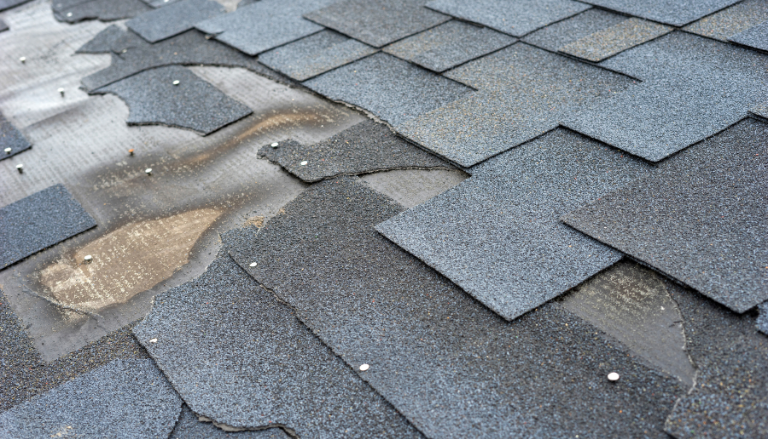
Many people assume only hurricanes damage roofs. In reality, shingle wind ratings vary widely by product, commonly ranging from about 60 mph to well over 100 mph, and those ratings assume the shingles are properly installed and fully sealed. Older roofs, weakened adhesive strips, poor installation, and repeated storms can cause shingles to fail at much lower speeds.
That means a strong thunderstorm, a tropical storm, or several rounds of gusty weather can quietly weaken a roof even when no single event feels dramatic. Roof age, pitch, tree cover, and exposure all affect how much wind stress your roof absorbs.
Why Coastal Georgia Roofs Are More Vulnerable
Roofs in Savannah, Pooler, Rincon, and across Chatham and Bulloch counties face a demanding mix of conditions. Salt air, high humidity, intense heat, and frequent storms age roofing materials faster than in milder climates. Heat and moisture cycles can weaken the adhesive strips that hold shingles down, making wind uplift more likely long before a roof reaches the end of its lifespan.
Add hurricane season and fast-moving coastal storms, and even healthy-looking roofs can carry damage picked up over several seasons. Wind damage is cumulative, which is why local homeowners often ask us, can wind damage a roof without leaving visible signs? In this climate, it certainly can.
What Happens If Hidden Wind Damage Is Ignored?
Hidden wind damage does not stay hidden forever. Water finds its way in, usually during the next heavy rain, and by then the problem is bigger than it needed to be. Homeowners commonly face:
- Leaks and ceiling stains that appear weeks or months after the storm
- Wet insulation that loses effectiveness and raises energy bills
- Mold and mildew growth in the attic and walls
- Rotted or weakened roof decking that needs structural repair
Small problems become big ones quickly, which is exactly why catching damage early matters.
What to Do After a Windstorm: Step-by-Step Checklist
- Stay safe. Do not climb on the roof or enter the attic during unsafe conditions.
- Walk your property. Take dated photos of debris, damaged gutters, fallen limbs, and visible shingle problems.
- Check inside. Look at ceilings, walls, and the attic for stains, drips, or dampness.
- Protect against active leaks. Move belongings, place a bucket under drips, and call a professional about temporary tarping.
- Schedule a professional inspection. A trained roofer can spot hidden wind damage that homeowners often miss.
- Contact your insurance company promptly. Review your policy for wind coverage, deductibles, and filing deadlines, then share your photos and inspection findings.
- Keep records. Save photos, estimates, receipts, and all correspondence.
Think Your Roof May Have Taken a Hit?
Victory Roofing offers free roof inspections across the Savannah area. Call or text (912) 800-1544 and we will help you find out what is really going on up there.
What Does a Professional Roof Inspection Include?
A thorough inspection goes far beyond a quick look from the yard. During a free inspection with our team, we examine:
- Shingle condition, including seal strength, creasing, and missing pieces
- Flashing around chimneys, vents, and valleys
- Ridge caps, hips, and roof edges
- Gutters, fascia, and drip edge
- Signs of moisture or decking problems
- Photo documentation you can share with your insurance company
Afterward, we explain what we found in plain language and tell you honestly whether you need a repair, a replacement, or nothing at all. No upsells and no pressure.
Roof Repair or Roof Replacement After Wind Damage?
The right answer depends on how widespread the damage is and how old your roof is. If wind damage is limited to a few shingles, resealed tabs, or loosened flashing, professional roof repair is often all you need.
If damage is widespread, your roof is near the end of its lifespan, or repeated storms have compromised it, a full roof replacement may be the smarter long-term choice. A new roof from a GAF Certified, Atlas Platinum Select Pro Installer includes enhanced warranty options and is built for Georgia weather.
Worried about the budget? We offer flexible financing options and work with you and your insurance company to keep the process simple and stress-free.
Not Sure Whether You Need a Repair or a Replacement?
Get a straight answer from a local team with no reason to oversell you. Ask about your free inspection today.
How to Protect Your Roof Before the Next Windstorm
- Schedule yearly maintenance. A professional inspection and cleaning at least once a year, and after any major storm, catches weak spots early. A roof maintenance program makes this easy.
- Trim overhanging branches. Limbs that rub or fall on the roof add stress during high winds.
- Keep gutters secure and clear. Properly installed gutters direct water away from your roof edge. If yours are loose or outdated, consider new gutter installations.
- Choose quality installation. During any replacement, correct nailing, sealing, and starter strips make a real difference in wind performance.
Why Homeowners in the Coastal Empire Choose Victory Roofing
Victory Roofing is a local, family-owned company with a showroom at 82 Columbia Dr in Pooler, GA. We are licensed and insured, GAF Certified, an Atlas Platinum Select Pro Installer, and BBB Accredited with an A+ rating. Homeowners rate us 4.9 stars across 162 Google reviews, often praising our fast communication and honest advice.
We proudly serve Pooler, Rincon, Savannah, Richmond Hill, Guyton, Springfield, Statesboro, Brunswick, St. Simons Island, Vidalia, Jesup, and nearby communities. See the full list on our areas we serve page.
Frequently Asked Questions About Wind Damage to Roofs
Can wind damage a roof without leaving visible signs?
Yes. Wind can break shingle seals, crease shingles, loosen flashing, and shift roof decking without any visible change from the ground. So, The damage typically shows up later as leaks or shingle loss, so a professional inspection after a storm is the safest way to know.
How can I tell if my roof has wind damage but no leaks yet?
Look for granules in gutters or on the ground, uneven or lifted shingles, loose gutters, and dampness in the attic. Because the most serious issues are often out of sight, a professional inspection is the reliable way to confirm.
How long after a storm can wind damage show up?
Leaks and shingle loss can appear days, weeks, or even months later, often during the next heavy rain or windstorm. Damage is easiest to fix when it is caught early.
Will homeowners insurance cover wind damage to a roof in Georgia?
Many policies cover wind damage, but coverage, deductibles (including separate windstorm or hurricane deductibles), and filing deadlines vary. Read your policy and contact your insurer promptly after a storm. We work with you and your insurance company throughout the process.
Should I go on my roof to look for damage myself?
No. Roofs are slippery and can hide weak spots, so climbing is dangerous, especially after a storm. Check from the ground with binoculars and call a professional.
Does a free inspection mean I have to buy anything?
No. Our free inspections come with no pressure. We explain what we find and let you decide.
The Bottom Line
So, can wind damage a roof without leaving visible signs? Yes, and the damage you cannot see is often the kind that costs the most when ignored. With hurricane season still active in coastal Georgia, now is the ideal time to make sure your roof is ready for whatever comes next.
Get Your Free Roof Inspection
Do not wait for a ceiling stain to find out. Request your free inspection through our contact page or call or text (912) 800-1544. We are open Monday to Friday, 8am to 6pm, and Saturdays by appointment. Victory Roofing, 82 Columbia Dr, Pooler, GA 31322.
