

Your gutters do more than keep your driveway dry during a storm — they are one of the most important defenses your roof has against water damage. When gutters are clogged, sagging, or improperly installed, water has nowhere to go but back up onto your roofline, your fascia, and eventually your home’s foundation. Many homeowners in Georgia don’t realize their gutters are causing roof damage until they see a stain on the ceiling or a soft spot on the roof deck. In this guide, the team at Victory Roofing walks through the seven warning signs that your gutters are causing roof damage, why it happens, and what to do about it before a small issue becomes an expensive repair.
Why Gutters and Roof Health Are Connected
A roof and its gutter system work as a single unit. Shingles shed rainwater toward the eaves, and gutters are supposed to carry that water safely away from the fascia, siding, and foundation. When a gutter is clogged with leaves, pulling away from the fascia board, or pitch incorrectly, water backs up under the shingles instead of flowing off the roof. Over time, this trapped moisture rots the roof deck, loosens shingles, and creates the perfect environment for mold and pests. This is exactly how gutters are causing roof damage in homes that otherwise have a perfectly good roof — the roofing material isn’t the problem, the drainage is.
Because the two systems are so closely linked, a roofing crew that only looks at shingles is missing half the picture. Every inspection at Victory Roofing includes a look at the gutter line itself — the pitch, the hangers, the seams, and the downspout placement — because that’s usually where the real story of a leak or a rotted fascia board begins. Homeowners are often surprised to learn that a roof leak they assumed came from a missing shingle actually traces back to a gutter that’s been quietly causing roof damage for months.
1. Sagging or Pulling-Away Gutters
The most visible sign that your gutters are causing roof damage is a gutter run that sags in the middle or has pull away from the fascia board. This usually happens when gutters are overloaded with standing water and debris, which puts stress on the hangers and fasteners. A sagging gutter no longer carries water to the downspout — instead, water spills over the back edge, directly onto the fascia and roof edge, where it can seep beneath the first course of shingles.
- Look for visible gaps between the gutter and the roofline.
- Check for bent or missing hangers every few feet.
- Watch for pooling water after a light rain.
2. Water Stains on Fascia or Soffit Boards
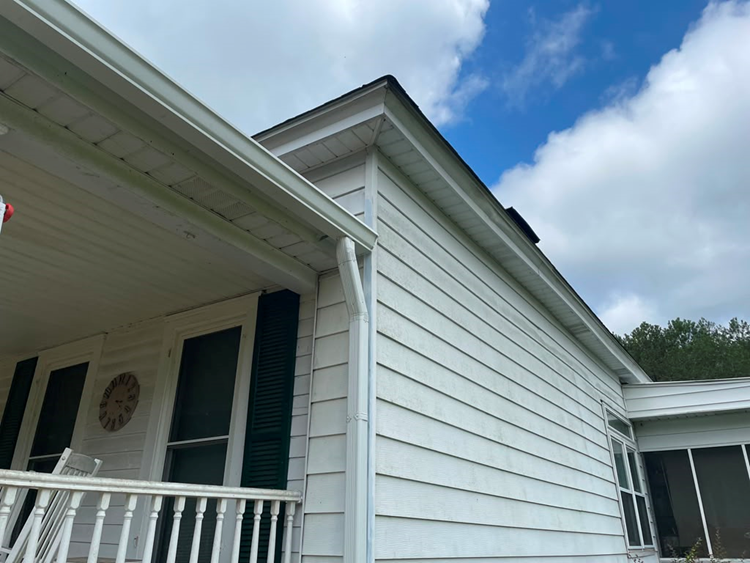
Overflowing gutters send water behind the fascia board, where it can travel upward into the roof deck.
Dark streaks or peeling paint on the fascia board — the horizontal trim just below the roofline — are a strong sign that gutters are causing roof damage rather than the roof itself failing. Fascia boards are meant to stay dry; when a gutter overflows or leaks at the seams, water runs straight down the fascia and can wick upward into the roof sheathing during heavy or prolong rain. Left unaddressed, this leads to soft, spongy wood that no longer holds fasteners securely.
3. Shingle Damage Near the Roofline
If you notice curling, lifting, or missing shingles concentrated near the edge of the roof — rather than scattered across the whole surface — clogged or overflowing gutters are often the cause. Standing water held against the lowest row of shingles by a blocked gutter keeps that section of the roof wet far longer than the rest of the roof, accelerating granule loss and shingle deterioration. This is one of the clearest patterns roofing professionals look for when diagnosing whether gutters are causing roof damage versus normal wear and tear. If you’re seeing this pattern, it’s worth having a professional roof repair inspection before the damage spreads further up the roof deck.
4. Overflowing Gutters During Rainstorms
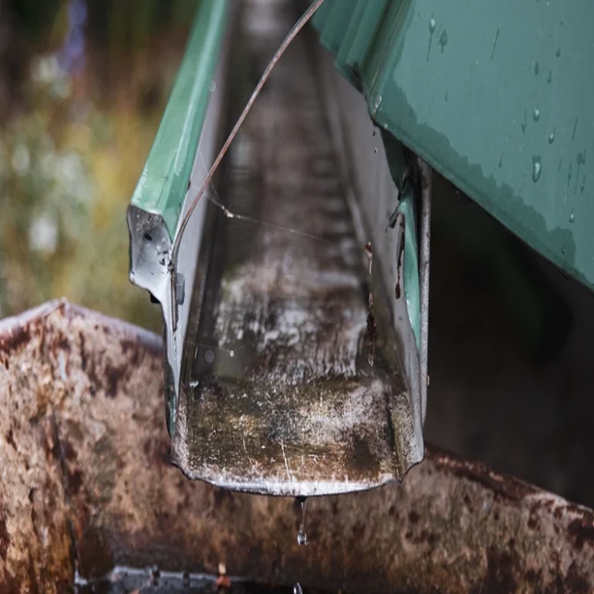
A gutter overflowing or dripping between seams is an early sign of roof-edge water damage.
Step outside during a moderate rain and watch what your gutters actually do. Water that sheets over the front lip, drips from a seam, or pours out faster than it should at the downspout means the system can’t keep up. This is a textbook example of gutters causing roof damage in real time — every overflow event soaks the roof edge, the fascia, and often the siding below. Regular roof cleaning and gutter clearing, especially in the fall when leaves and pine straw build up, is one of the simplest ways to prevent this cycle from repeating season after season.
5. Peeling Paint and Rotting Trim
Paint that bubbles or peels on trim boards near the roofline, or wood trim that feels soft when pressed, points to prolonged moisture exposure — usually from a gutter that isn’t draining correctly. Because this damage happens slowly, homeowners often mistake it for age or a bad paint job rather than recognizing that gutters are causing roof damage from the outside in. By the time paint failure is obvious, the wood underneath may already be compromise and need replacement, not just a fresh coat.
6. Pest Infestations Near the Roof Edge
Standing water in a clogged gutter is an open invitation for mosquitoes, but the bigger concern is what happens to the wood behind it. Carpenter ants, termites, and wood-boring insects are drawn to the soft, damp wood create when overflowing gutters are causing roof damage to the fascia and roof deck. If you’re noticing more insect activity around your roofline than in previous years, it’s worth checking whether a gutter problem is the underlying cause rather than treating the pests alone.
7. Basement or Foundation Water Problems
Not every symptom of a gutter problem shows up on the roof itself. When gutters and downspouts fail to carry water at least a few feet away from the home, that water pools around the foundation and can find its way into crawl spaces and basements. If you’re dealing with damp basement walls or standing water near your foundation after every storm, it’s a good idea to look up — the root cause is very often the same gutter system that’s already causing roof damage above.
How Professional Gutter Installation Prevents Roof Damage

Properly sized, correctly pitched gutters, installed and sealed by a professional crew, stop roof-edge water damage before it starts.
The good news is that every one of these seven signs is preventable. A correctly sized, properly pitched gutter system — installed by an experienced crew — carries water away from the roof edge instead of letting it pool and seep behind trim boards. At Victory Roofing, our gutter installation services include seamless aluminum gutters sized specifically for your roof’s water flow, secured with heavy-duty hangers, and pitched correctly so water reaches the downspouts instead of overflowing. Combined with routine roof maintenance, a properly functioning gutter system is one of the most cost-effective ways to protect your roof deck, fascia, and foundation for years to come.
When to Call Victory Roofing
If you’ve noticed any of the seven signs above — sagging gutters, water-stained fascia, edge-concentrated shingle damage, overflow during rain, peeling paint, pest activity, or foundation moisture — it’s time to have your gutters and roof inspected together, not separately. Victory Roofing has been helping homeowners across the Georgia coast identify exactly how and where gutters are causing roof damage, and fixing the problem at its source rather than just patching the symptom. You can learn more about our team and our approach on our About Us page.
| Worried your gutters might already be causing roof damage?
Get a free inspection from Victory Roofing and find out before it becomes a bigger repair. Contact us today. |
Preventing Future Gutter and Roof Damage
Prevention is always less expensive than repair. A few simple habits go a long way toward stopping gutters from causing roof damage in the first place:
- Clean gutters at least twice a year — more often if you have overhanging trees.
- Check hangers and fasteners annually for looseness or rust.
- Make sure downspouts extend several feet away from the foundation.
- Have your roof and gutters inspected together after major storms.
- Replace old, undersized, or mismatched gutter sections before they fail.
If a full gutter replacement is the right move for your home, budget doesn’t have to stand in the way. Victory Roofing offers flexible financing options so you can get durable, correctly installed gutters now and pay over time.
| Ready to stop gutters from causing roof damage for good?
Ask about our financing options and get a properly installed gutter system without paying it all upfront. |
Final Thoughts
Your roof and your gutters are only as strong as their weakest connection. The seven signs above — sagging gutters, stained fascia, edge shingle damage, overflow, peeling paint, pests, and foundation moisture — are all ways your home tells you that gutters are causing roof damage before the problem becomes a full roof replacement. Catching these signs early, and working with a team that inspects the roof and gutter system together, is the simplest way to protect your home for the long term.
Frequently Asked Questions
How do I know if my gutters are causing roof damage or if it’s just the roof aging?
Age-relate roof wear is usually spread evenly across the whole roof surface. Damage cause by gutters, on the other hand, is concentrate right along the roofline — curling shingles, dark streaks, or soft fascia in a specific stretch where a gutter sags or overflows. If the damage follows the line of a gutter run rather than the whole roof, gutters are likely causing the roof damage rather than simple aging.
Can clogged gutters really damage a roof that’s only a few years old?
Yes. A roof’s age doesn’t protect it from water that’s being held against the shingles and roof deck by a block or overflowing gutter. Even a newer roof can develop rot, granule loss, and leaks within a couple of seasons if gutters are causing roof damage by trapping moisture at the edge.
How often should gutters be clean to prevent roof damage?
Most homes do well with a thorough cleaning in the spring and again in the fall, after leaves have dropped. Homes with heavy tree cover or pine straw nearby may need gutters checked three to four times a year. Staying ahead of buildup is the simplest way to stop gutters from causing roof damage before it starts.
Is it cheaper to fix the gutters or wait until the roof needs full replacement?
Fixing or replacing a gutter system is almost always far less expensive than a full roof replacement. Addressing the signs above early — before gutters cause roof damage that reaches the deck and framing — typically costs a fraction of what a premature roof replacement would run.
| Don’t wait for a leak to find out your gutters are causing roof damage.
Schedule your free inspection with Victory Roofing today: contact us |
Already worked with us? We’d love to hear about it — leave Victory Roofing a review on Google and help other homeowners in your area find a roofing and gutter team they can trust.
