

It is easy to relax once September ends, but the Atlantic hurricane season officially runs through November 30, and coastal Georgia can still see tropical systems, gusty squalls, and heavy rain well into the fall. If your roof has not been looked at since summer, now is the right time. At Victory Roofing, our crews work on roofs across Savannah, Pooler, and Rincon, and the same small problems keep showing up right before a storm: lifted shingles, clogged gutters, and cracked flashing.
This guide gives you a quick summary, seven step-by-step hurricane season roof checks, and a clear plan for what to do if you find damage. Whether you own a home in Savannah, Pooler, Richmond Hill, or Statesboro, these checks take about an hour and can save you from a very expensive surprise.
Why Late-Season Storms Still Matter on the Georgia Coast
Many homeowners assume the danger passes after Labor Day. In reality, tropical systems can still form near the Southeast coast during autumn. Even a storm that stays offshore can push strong winds, wind-driven rain, and high surf toward Chatham County and the surrounding Coastal Empire.
Your roof has also just been through a hot, humid Georgia summer. Heat, UV exposure, afternoon thunderstorms, and salt air slowly loosen shingle adhesive and dry out sealants. A roof that looked fine in May may have weak spots today. That mix of summer wear and fall storms is exactly why hurricane season roof checks matter now, not after the forecast turns serious.
The good news is that most warning signs are visible from the ground or from inside your attic. Never climb onto a steep or wet roof yourself. Use binoculars, your phone’s zoom, or a professional drone photo instead.
Check 1: Look for Missing, Cracked, or Lifted Shingles
Shingles are your roof’s first line of defense, and wind goes after the weakest ones first. Walk around your home in daylight and scan every slope with binoculars. Look for shingles that are missing, curled at the edges, cracked, or sitting higher than the ones around them. Dark patches where granules have worn away and bare spots where a shingle has blown off are also red flags.
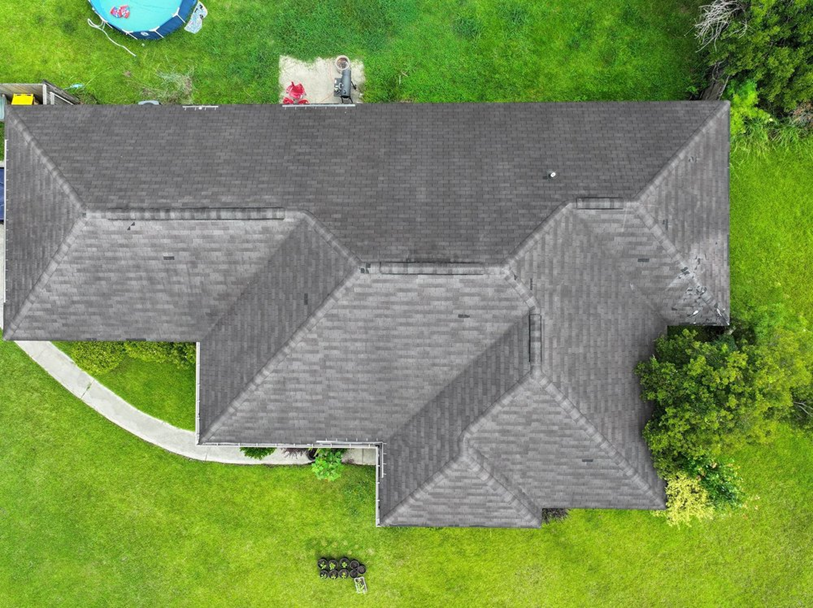
Exposed spots and displaced shingles on an aging roof, as seen in a drone inspection photo.
Even one missing shingle can let wind-driven rain reach the underlayment and roof deck. If you spot any of these problems, professional roof repair is often enough to stop the damage before it spreads, as long as it is done before the next storm arrives.
Check 2: Inspect Flashing, Vents, Skylights, and Chimneys
Water rarely beats a flat field of shingles. It gets in where the roof changes direction or where something pokes through it. Flashing is the thin metal that seals those spots, and it is one of the most overlooked items in any list of hurricane season roof checks. Look closely at these areas:
- Chimneys: look for gaps, rust, or dried-out sealant along the base.
- Skylights: check for cracked seals, lifted edges, or staining on the ceiling below.
- Plumbing vents and pipe boots: rubber boots crack under summer sun and are a common leak source.
- Valleys and roof-to-wall joints: make sure metal is flat, tight, and free of debris.
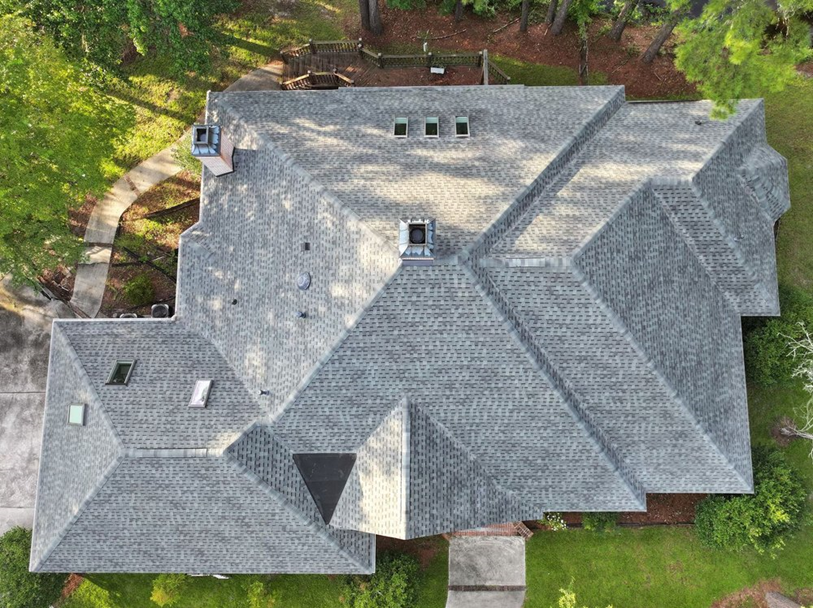
Chimneys, skylights, and vents are the spots where flashing needs the closest look.
If sealant looks cracked or is pulling away, do not just cover it with a tube of caulk. A quick patch hides the problem and often fails in the first heavy rain.
Check 3: Clean and Test Your Gutters and Downspouts
Gutters do more for your roof than most people realize. When they clog with pine needles, leaves, and shingle grit, water backs up under the roof edge and soaks the fascia and decking. Fall is when pine straw and early leaves start to pile up across Georgia, so clean your gutters before a storm, not after. Here is a simple routine:
- Remove debris by hand from a stable ladder, or hire a professional.
- Flush the gutters with a hose and confirm water reaches the downspouts.
- Make sure downspouts release water several feet away from your foundation.
- Look for sagging sections, loose brackets, and separated seams.
If your gutters are sagging, rusted, or too small for the rain Savannah can produce in a single afternoon, it may be time to look at new gutter installations. Properly sized gutters carry water safely away from your roof and your home.
Check 4: Check for Algae, Moss, and Granule Loss
Those black or dark streaks on Georgia roofs are usually algae, and they thrive in warm, humid weather. Algae is mostly cosmetic at first, but it holds moisture against the shingles and can shorten the life of your roof. Moss is more serious because its roots can lift shingle edges and let water underneath.
Also check your gutters and driveway for loose granules, the sand-like grit that shields shingles from the sun. Heavy granule loss means your shingles are aging and will be less prepared for a hard, wind-driven rain. A gentle soft wash is the safe way to deal with algae. High-pressure washing can strip granules and cause more harm than good, so leave it to a team that offers roof cleaning designed for asphalt shingles.
Check 5: Look Inside Your Attic
Some of the most important hurricane season roof checks happen indoors. Bring a flashlight into the attic on a bright day and look up at the underside of the roof deck. You are searching for:
- Daylight showing through the roof boards
- Dark stains, rings, or damp spots on the wood
- Wet or matted insulation
- A musty smell or visible mold
- Rusty nail tips or condensation, which point to poor ventilation
Glance at your ceilings after a rain, too. A brown or yellow stain that grows over time means water is finding its way in. Poor attic ventilation traps heat and humidity, which cooks shingles from below and invites mold, so ridge vents, soffit vents, and attic fans all need to be clear and working.
Catching these issues early is far easier than repairing rotten decking and ruined drywall. A steady roof maintenance plan, with a professional inspection and cleaning at least once a year and again after any major storm, is the most reliable way to keep small issues small.
Check 6: Trim Trees and Secure Loose Items
In a tropical storm, the biggest danger to your roof is often not the wind itself but what the wind throws at it. Dead limbs, overhanging branches, and loose outdoor items become projectiles. Before October ends:
- Trim branches that hang over or touch the roof, and hire a certified arborist for large limbs.
- Remove dead or leaning trees near the house.
- Store or tie down patio furniture, grills, trash cans, and decorations.
- Check satellite dishes, antennas, and solar panel mounts for loose fasteners.
Pine trees are common across Pooler, Rincon, Guyton, and Springfield, and they drop needles and limbs constantly. Keeping them trimmed also reduces debris in your gutters, which ties this check back to Check 3.
Check 7: Document Your Roof and Review Your Coverage
The final check is paperwork, and it is the one homeowners skip most often. Take clear, dated photos of every slope, your gutters, and the ceilings inside your home right now, while everything is intact. If a storm damages your roof, before-and-after evidence makes an insurance claim faster and far less stressful.
- Save your photos to cloud storage so they survive a storm.
- Read your homeowners policy for wind or hurricane deductibles and any roof age or condition rules.
- Keep records of past repairs, warranties, and invoices.
- Save the contact details of a local, licensed contractor before you need one.
Ask your insurance company what documentation it expects. Requirements vary between carriers and policies, so confirm the details directly.
Not Sure What You’re Looking At? Get a Free Roof Inspection
Our team will check your shingles, flashing, gutters, and attic ventilation, then explain what we find in plain language with no pressure. Request your free roof inspection today and go into the rest of hurricane season with confidence.
Roof Restoration Before and After
Sometimes the checks above show that a roof is past the point of simple fixes. Here is a recent Victory Roofing project. The first photo shows the original roof with algae streaking and worn shingles. The second shows the same home after a full replacement.
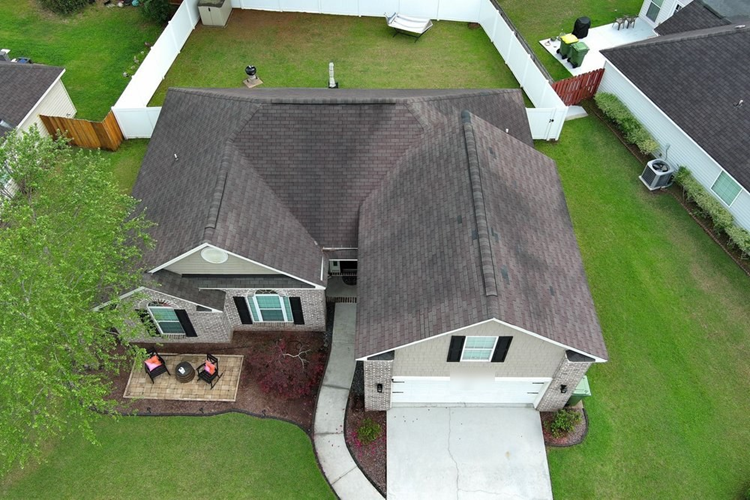
Before: an aging roof with dark algae streaks and worn shingles.
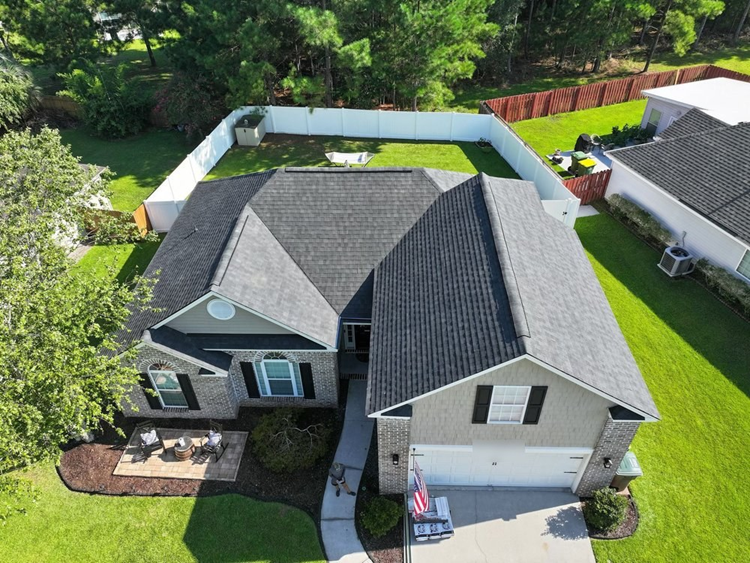
After: a new shingle roof installed by Victory Roofing.
This kind of transformation protects a home for years. When damage is widespread, when shingles are curling across several slopes, or when leaks keep coming back, a full roof replacement is usually a smarter investment than patching again and again. As a GAF Certified and Atlas Platinum Select Pro Installer, Victory Roofing installs shingle systems built for the coastal Georgia climate and offers enhanced warranty options on materials and workmanship.
What to Do If You Find Roof Damage
- Stay off the roof. Wet or damaged roofs are dangerous, and walking on them can cause more damage.
- Take photos. Capture the damage from the ground and any interior stains or leaks.
- Protect the inside of your home. Move furniture away from leaks and place buckets under drips.
- Call a licensed local roofer. Small leaks can turn into major structural damage fast, so do not wait.
- Contact your insurance company. Start a claim if the damage looks storm related.
- Watch out for storm chasers. Verify a contractor’s license, insurance, local address, and reviews before signing anything.
Cost worries should not delay a needed repair. Victory Roofing works with you and your insurance company, and offers flexible roofing financing options so you can protect your home now instead of waiting.
Found Damage? Call Now for Fast Help
Leaks and storm damage do not wait. Call or text Victory Roofing at (912) 800-1544 for a quick response and a free inspection.
Roofing Help Across Savannah and the Coastal Empire
Victory Roofing is a local, family-owned roofing company based in Pooler, GA. We serve Savannah, Pooler, Rincon, Richmond Hill, Guyton, Springfield, Statesboro, Brunswick, St. Simons Island, Vidalia, and Jesup. We are licensed and insured, BBB accredited with an A+ rating, and hold a 4.9 rating across 162 Google reviews. Homeowners choose us for honest pricing, fast response times, and free inspections with no pressure.
Frequently Asked Questions About Hurricane Season Roof Checks
When does hurricane season end in Georgia?
The Atlantic hurricane season runs from June 1 to November 30. Late-season storms are still possible in October and November, so it is smart to finish your hurricane season roof checks before the end of October.
How often should I get a professional roof inspection?
We recommend a professional roof inspection and cleaning at least once a year, and again after any major storm, to catch small issues before they become costly repairs.
Can I inspect my roof myself?
You can safely do ground-level checks, look at your gutters, and inspect your attic. Do not climb onto the roof yourself. A professional has the training and safety equipment to inspect it properly.
What are the signs my roof needs repair before a storm?
Common warning signs include missing or curling shingles, cracked flashing, granules in your gutters, water stains on ceilings, daylight in the attic, and sagging gutters.
How long does a roof replacement take?
Most residential roof replacements take one to three days, depending on roof size, material, and weather conditions. During a free inspection, Victory Roofing gives you a clear timeline before any work begins.
Does Victory Roofing offer emergency roof repair?
Yes. We offer emergency roof repair across the Savannah area, including Pooler, Rincon, and Chatham County. Storm damage and leaks do not wait, and neither do we.
Do Not Wait for the Forecast to Change
Hurricane season roof checks are simple, low-cost insurance for the most expensive part of your home’s exterior. Look at your shingles, flashing, gutters, roof surface, attic, trees, and paperwork before October ends, and you will know exactly where your roof stands.
Book Your Free Inspection Before October Ends
Call or text Victory Roofing at (912) 800-1544, or visit our showroom at 82 Columbia Dr, Pooler, GA 31322. We are open Monday to Friday, 8am to 6pm, and Saturdays by appointment. Free inspections, honest answers, and a roof you can trust.
