
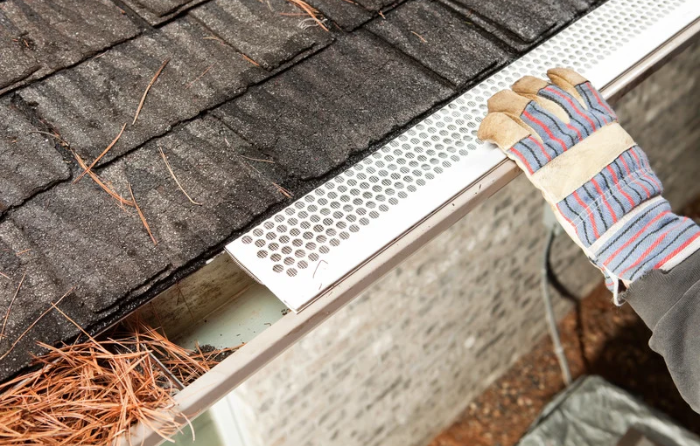
Walk outside right now and look up at your roofline. If you live in Southeast Georgia, there is a good chance you will see a few tall pines nearby, and a thin layer of brown needles sitting on your shingles or poking out of your gutters. It looks harmless. It is not. One of the most common questions homeowners ask is how often the gutters really need attention. The honest answer is: far more often than you would for a house surrounded by oaks or maples. A good pine needle gutter cleaning routine is the difference between a dry roof edge and a costly repair.
In this guide, we break down a realistic schedule for pine needle gutter cleaning, explain why pine needles cause so many problems, the warning signs to watch for, and what you can do to protect your roof. Whether you want to tackle it yourself or hire a pro, you will leave with a clear schedule you can follow all year.
A Seasonal Cleaning Schedule for Pine Yards
The standard advice for most homes is to clean gutters twice a year, once in spring and once in fall. That rule does not hold up when pines are involved. For reliable pine needle gutter cleaning, use the table below as your starting point.
| Your Situation | Recommended Gutter Cleaning Frequency |
| Pine trees directly overhanging the roof | Every 4 to 8 weeks in fall, plus 3 to 4 cleanings per year |
| Pine trees within 20 to 30 feet of the house | 3 to 4 times per year |
| A few pines in the neighborhood, none close | 2 to 3 times per year |
| Gutters with guards or covers installed | 1 to 2 inspections per year, plus cleaning as needed |
| After a storm or heavy wind | Inspect within a few days and clear any debris |
These are general guidelines. Your own schedule depends on how many trees you have, how close they are, and how your gutters are built. We cover those factors in more detail below.
Why Pine Needles Clog Gutters Faster Than Leaves
Leaves are wide and flat, so they tend to sit in a gutter and break down slowly. Pine needles behave very differently. They are long, thin, and sharp, which lets them slip past the edge of the roof and weave together inside the trough like a woven mat. In the photo below, you can see how tightly the needles pack into the gutter, with a pinecone sitting right in the middle of the run.
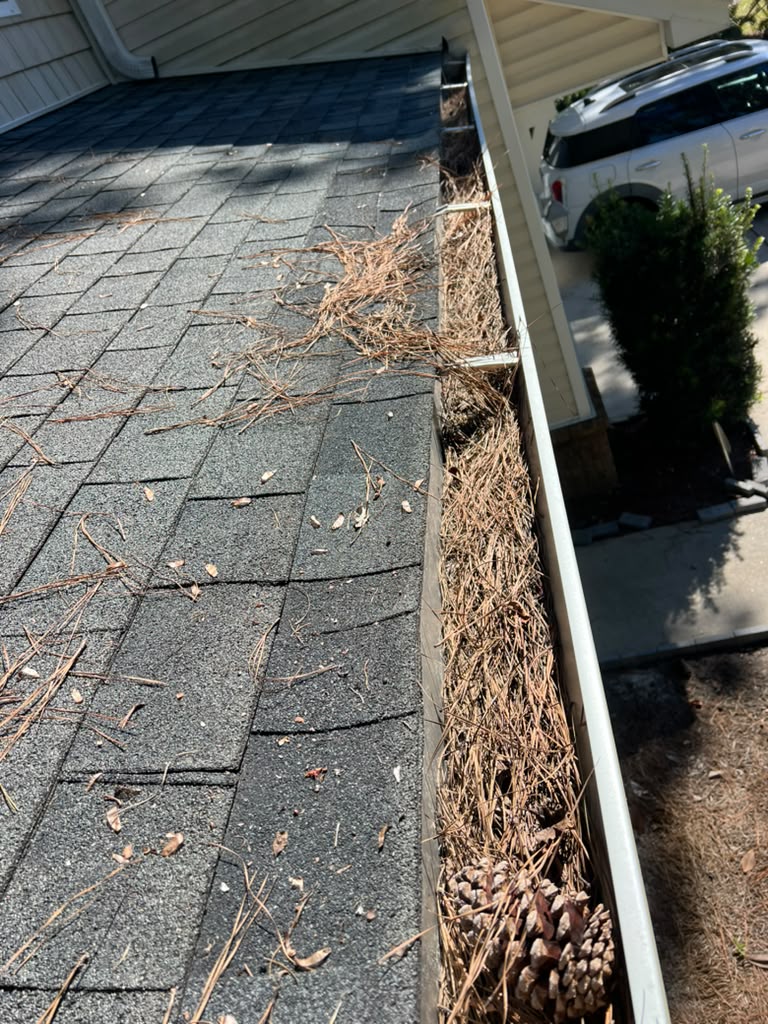
Pine needles and a pinecone packed into a gutter. This much debris blocks water from reaching the downspout.
Here is why pine debris is so hard on gutters:
- Needles interlock. Once a few strands catch on a bracket or seam, more needles pile on and form a dense mat that water cannot pass through.
- They land on the roof first. Needles collect on shingles, then wash down into the gutter with every rain, so the buildup keeps growing.
- Pinecones create blockages. A single pinecone can plug a downspout opening and stop the whole system from draining.
- They hold moisture. A wet mat of needles stays damp for days, which encourages moss, rot, and rust.
- They drop for months. Pines shed needles heavily in fall, and cones, pollen, and twigs add to the mess during other seasons.
Because of this, a pine-heavy yard needs a more aggressive pine needle gutter cleaning schedule than almost any other type of landscape.
What Happens When Gutters Full of Pine Needles Are Ignored
Gutters exist to move water off your roof and away from your foundation. When they are packed with pine needles, the water has nowhere to go. It backs up, overflows, and finds the path of least resistance, and that path is often under your shingles.
Water Backing Up Under Your Shingles
Once the gutter is full, rainwater pools along the bottom edge of the roof. It can soak the fascia board, creep beneath the first row of shingles, and reach the roof deck. Over time that moisture leads to rot, mold, and interior leaks. If you already notice stains on a ceiling or damp spots near an exterior wall, a professional roof leak repair inspection should be your next step.
Damaged Shingles and Fascia
Standing water and constant dampness weaken shingles along the roof edge. They curl, crack, and lose their granules, and the wood behind them begins to soften. Catching the problem early can mean a simple fix such as shingle repair instead of a much larger project.
Foundation, Landscaping, and Pest Problems
Overflowing gutters dump water right beside your foundation. That can erode soil, flood flower beds, and in some cases lead to basement or crawl space moisture. Clogged gutters also attract mosquitoes, nesting birds, and rodents looking for shelter.
5 Signs Your Gutters Need Cleaning Right Now
You do not need to wait for a calendar reminder. If you notice any of these signs, it is time to act, no matter when you last cleaned:
- Visible needles sticking out of the gutter or piled on the shingles near the roof edge.
- Water spilling over the sides of the gutter during rain instead of flowing to the downspout.
- Sagging or pulling gutters, since a heavy wet mat of needles can weigh far more than you would expect.
- Pooling water or eroded soil near the foundation.
- Downspouts that barely trickle or stay dry in a heavy rain.
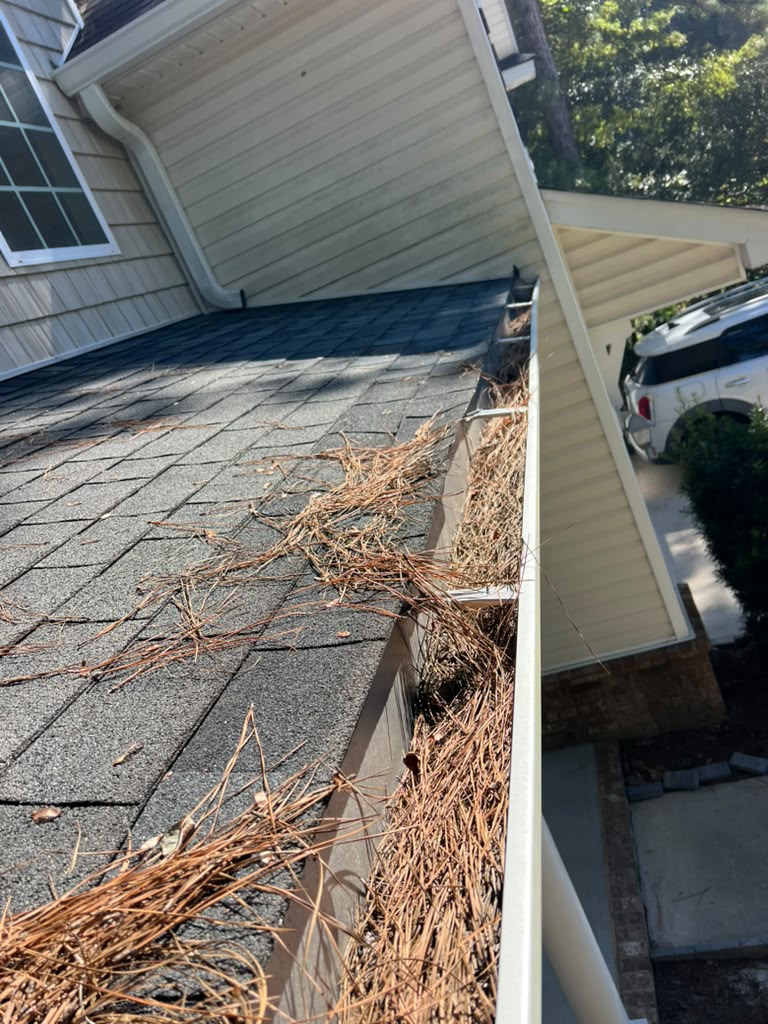
Needles collecting on the shingles and filling the gutter: a clear sign that gutter cleaning is overdue.
The second photo shows needles building up on the roof surface while the gutter beside it is nearly full. This is the stage where a cleaning is overdue. Waiting for the next rainstorm is exactly when the damage starts.
| Not Sure If Your Gutters Are Already Clogged?
Do not wait for the next heavy rain to find out. A quick inspection can show whether your gutters are draining properly or hiding a problem. Ask Victory Roofing for a free gutter inspection and quote today. |
What Affects How Often You Should Clean Your Gutters
There is no single number that fits every house. When planning your own pine needle gutter cleaning schedule, think through these factors:
Tree Type, Size, and Distance
Mature pines drop far more debris than young ones. Trees that hang directly over the roof deposit needles straight into the gutter, while trees farther away rely on wind to carry them. The closer and taller the pines, the more often you should clean.
Gutter Style and Condition
Open gutters collect everything. Gutters with guards stop larger debris but can still gather a fine layer of needles on top. Poorly pitched gutters hold standing water, which makes any clog worse. If your system is old, damaged, or constantly overflowing, a new setup may be the better investment. Our team handles gutter installations for homeowners who want a system that works better with heavy debris.
The Best Time of Year to Clean Gutters With Pine Trees
In Southeast Georgia, a practical yearly plan looks like this:
- Early spring: Remove winter buildup and check for damage before the rainy season.
- Early summer: Clear pollen, cones, and storm debris so summer downpours can drain.
- Early fall: Get gutters clean before the heaviest needle drop begins.
- Late fall or early winter: Do a final cleaning once most needles have fallen.
If your pines are especially close, add a quick mid-fall check. A short visit in the middle of needle season can save you from a full overflow later.
DIY Gutter Cleaning vs. Hiring a Professional
Plenty of homeowners clean their own gutters, and it can be done safely on a single-story home with the right ladder and gloves. A garden trowel or gutter scoop helps pull out the matted needles, and a hose flush confirms the downspouts are clear.
That said, gutter cleaning on a two-story home, a steep roof, or a house with towering pines is a different story. Ladders slip on needle-covered ground, shingles become slick, and falls from roofs cause serious injuries every year. Hiring a professional is often the safer and faster choice, and a trained crew can spot loose brackets, rusted seams, and early roof damage while they work.
How to Reduce Pine Needle Buildup Between Cleanings
You cannot stop pines from dropping needles, but you can make the cleanup easier:
- Trim overhanging branches so fewer needles land directly on the roof.
- Install quality gutter guards designed for fine debris, such as micro-mesh styles.
- Sweep the roof surface with a soft broom or blower before needles wash down.
- Clean the roof itself. Moss and algae trap needles against the shingles, and professional roof cleaning removes the growth that holds debris in place.
- Check downspouts and elbows, which are the most common spots for hidden clogs.
Make Gutter Care Part of Your Roof Maintenance Plan
Your gutters and roof work together as one drainage system. When one fails, the other pays for it. That is why gutter checks should be built into a larger roof maintenance routine that also covers shingles, flashing, and roof penetrations. A yearly roof checkup combined with seasonal gutter cleaning helps you catch small problems while they are still affordable to fix, and it extends the life of your roof.
Gutter Cleaning for Homeowners Across Southeast Georgia
Pine trees are everywhere in our region, from coastal communities to inland towns. If you live in Brunswick, St. Simons Island, Richmond Hill, Statesboro, Rincon, or nearby, you likely deal with falling needles each season. You can see the full list of towns we work in on our areas we serve page.
Why Homeowners Trust Victory Roofing
When it comes to your roof and gutters, you want a team that treats your home like their own. Victory Roofing helps Georgia homeowners protect their roofs with honest inspections, clear communication, and quality workmanship. Whether you need a one-time cleanup, a long-term maintenance plan, or repairs after neglected gutters have caused damage, our crew can handle it from start to finish.
Here is what you can expect when you call Victory Roofing:
- A clear explanation of what we find on your roof and gutters.
- Photos of problem areas so you can see exactly what is happening.
- Straightforward recommendations with no pressure.
| Ready to Get Your Gutters Cleaned Before the Next Rain?
Do not let pine needles turn into a roof repair bill. Contact Victory Roofing today to schedule your gutter cleaning and roof inspection. Call or message us now and protect your home before the next storm. |
Frequently Asked Questions
How often should gutters be cleaned if you have pine trees?
At least 4 times a year, and every 4 to 8 weeks during peak needle drop if the trees are directly over your roof. Homes with fewer or more distant pines may need only 2 to 3 cleanings annually.
Do pine needles damage gutters?
Yes. Pine needles form dense mats that block water, add heavy weight, and trap moisture. This can cause overflow, sagging gutters, rust, and water getting under shingles.
What is the best month to clean gutters when you have pines?
Early fall, right before the heaviest needle drop, is the most important time. A second cleaning in late fall or early winter, plus spring and early summer checks, rounds out a solid plan.
Can clogged gutters cause roof leaks?
Yes. When gutters are full, water backs up along the roof edge and can seep under shingles, which may lead to rot, mold, and interior leaks.
Final Thoughts
So, how often is enough? If your yard has pines, plan on cleaning at least four times a year and add extra visits during peak fall needle drop. Regular gutter cleaning is one of the cheapest ways to protect your shingles, fascia, foundation, and landscaping.
A few minutes of attention each season can prevent water damage that costs thousands to repair. If you would rather leave it to the experts, Victory Roofing is ready to help you stay ahead of the needles.
| Protect Your Roof This Pine Season
Get a free quote for pine needle gutter cleaning and a roof inspection from Victory Roofing. Schedule your visit today and keep water flowing where it belongs. |
