

Georgia weather is tough on roofs. Summer heat bakes your shingles, afternoon thunderstorms dump heavy rain in minutes, coastal humidity feeds algae, and hurricane season runs from June through November. If you live in the Savannah area, in towns like Rincon, Pooler, Richmond Hill, or Brunswick, your roof works hard almost every month of the year.
That is why so many homeowners rely on local roofing services instead of hiring the first out-of-town crew that knocks on the door. At Victory Roofing, we work on Georgia roofs every day, and we know how this climate wears them down. In this guide, we explain how local roofing services protect your home, what Georgia weather does to your roof, and how to know when it is time to call a professional.
Quick answer: Local roofing services protect your home from Georgia weather by inspecting for storm and heat damage, repairing leaks before they spread, replacing worn roofs with materials built for this climate, and maintaining your roof, gutters, and ventilation all year. Because local roofers understand Georgia storms, humidity, and building requirements, their recommendations are practical and long lasting.
Key Takeaways
- Heat, humidity, wind, and heavy rain each damage roofs in different ways.
- Early inspections and small repairs cost far less than emergency fixes after a leak.
- The right materials, ventilation, and flashing matter as much as the shingles themselves.
- Regular maintenance, roof cleaning, and healthy gutters extend the life of your roof.
- A local roofer can respond quickly, knows the area, and stays accountable after the job is done.
Why Georgia Weather Is So Hard on Your Roof
Your roof is the first line of defense for everything inside your home, and in Georgia it faces a long list of threats. Understanding them helps you see why professional roofing matters.
- Intense heat and UV rays. Long, hot summers dry out shingles, cause granule loss, and make roofing materials brittle over time. Poor attic ventilation makes this worse by trapping heat under the roof deck.
- High humidity. Moist air encourages algae, moss, and mildew. The dark streaks you see on many roofs are not just unattractive. They hold moisture against the shingles.
- Heavy rain and thunderstorms. Fast downpours expose weak flashing, worn sealant, and clogged gutters. Water will find even the smallest gap.
- Hurricane and tropical storm winds. Strong winds lift shingles, loosen ridge caps, and drive rain sideways under damaged edges.
- Falling debris. Pine needles, limbs, and leaves collect in valleys and gutters, trapping water and speeding up wear.
The table below shows how each threat damages a roof and how local roofing services respond.
| Georgia Weather Threat | Common Roof Damage | How a Local Roofer Helps |
| Heat and UV rays | Cracked, curling, or bare shingles | Inspection, better attic ventilation, durable replacement shingles |
| Humidity | Algae, moss, and trapped moisture | Roof cleaning and preventive maintenance |
| Storm winds | Lifted or missing shingles, damaged flashing | Fast roof repair and secure re-fastening |
| Heavy rain | Leaks, water stains, clogged gutters | Flashing repair, gutter installation, and drainage checks |
| Debris | Blocked valleys and punctured shingles | Debris removal and regular roof checkups |
What Are Local Roofing Services?
Local roofing services are roof inspection, repair, replacement, cleaning, maintenance, and gutter work provided by a contractor based in the community they serve. Unlike storm-chasing companies that move from state to state after a disaster, a local roofer has a reputation to protect, knows the neighborhoods, and will still be around years later if you have a question or a warranty concern.
For homeowners in Rincon, Pooler, Statesboro, Springfield, Guyton, and nearby towns, that local knowledge makes a real difference. A local team understands which materials hold up in coastal humidity, how quickly storms move through the region, and what to look for after a heavy blow.
1. Roof Inspections That Catch Problems Early
The most valuable thing local roofing services do is find problems before you see them. By the time a stain appears on your ceiling, water may have been soaking into the decking and insulation for weeks. A thorough roof inspection looks at much more than the shingles you can see from the street. A professional inspection typically checks:
- Shingles for cracking, curling, blistering, and granule loss
- Flashing around chimneys, vents, skylights, and walls
- Roof valleys, ridges, and edges
- Underlayment and decking wherever damage is visible
- Gutters, downspouts, and drip edges
- Attic ventilation and signs of moisture
The photo below shows what a closer look can reveal. Torn shingles and exposed underlayment may seem minor from the ground, but they leave your home open to water the next time it rains.
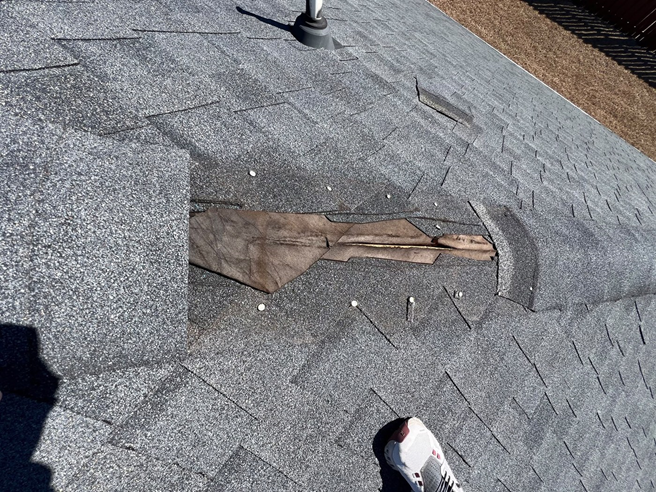
Exposed underlayment from missing shingles is a common finding during a storm damage inspection.
Catching this kind of damage early usually means a small repair instead of a major project, and it gives you clear photos and notes if you need to file an insurance claim.
2. Fast Roof Repair After Georgia Storms
When severe weather hits, speed matters. A missing shingle or damaged flashing can let water into your attic within hours. Local roofing services can often respond faster than out-of-area crews because they are already nearby and familiar with the roads, neighborhoods, and local conditions.
Professional roof repair goes beyond patching the visible problem. A good roofer finds out why the damage happened, checks the surrounding area, and makes the repair so it holds up through the next storm. Common repairs include:
- Replacing missing, cracked, or lifted shingles
- Resealing or replacing damaged flashing
- Fixing leaks around vents, chimneys, and skylights
- Re-securing ridge caps and loose edges
- Protecting exposed areas until permanent repairs can be completed
Think your roof has storm damage? Do not wait for the next rain. Request a roof inspection and estimate from Victory Roofing today and get a clear answer before a small problem becomes a costly one.
3. Roof Replacement Built for Georgia Conditions
Sometimes repairs are not enough. If your roof is near the end of its life, has widespread damage, or keeps leaking in different places, a full replacement is the smarter investment. A local roofer will help you choose a system designed for Georgia heat, humidity, and wind rather than a generic package.
A quality roof replacement in Georgia should include:
- Careful removal of the old roofing and inspection of the deck underneath
- Quality underlayment and water barriers in the areas where leaks are most likely
- New flashing, drip edge, and vents instead of reusing worn parts
- Shingles or other materials rated for strong winds and heavy UV exposure
- Proper attic ventilation to keep heat and moisture from building up
- Thorough cleanup of nails and debris when the job is finished
Roof design matters too. Hip roofs, like the one pictured below, slope on all four sides and tend to perform well in strong winds, which makes them a popular choice across coastal Georgia. Whatever the style, correct installation is what keeps shingles in place when storms roll in.
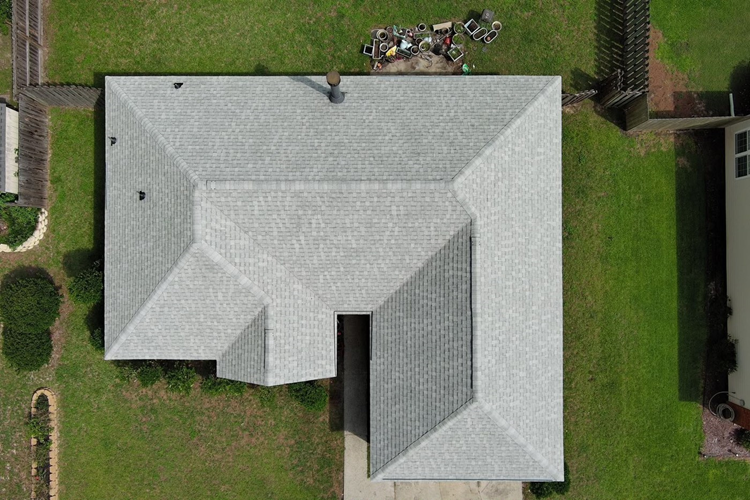
A completed hip roof replacement in Brooklet, GA.
Replacing a roof is a big decision, so ask your roofer to explain material options, warranty coverage, timeline, and financing in plain language. You should never feel rushed.
4. Roof Maintenance and Roof Cleaning
Georgia humidity means roofs rarely stay clean for long. Algae streaks, moss, and lichen can shorten a roof’s life by holding moisture against the surface. Regular roof maintenance keeps small issues from turning into expensive ones, and professional roof cleaning removes buildup safely when it is done correctly. A typical maintenance visit includes:
- Clearing debris from valleys, flashing areas, and gutters
- Checking sealants, fasteners, and flashing
- Spotting early signs of wear after storm season
- Treating algae and moss growth
- Keeping notes and photos that help with warranty or insurance questions
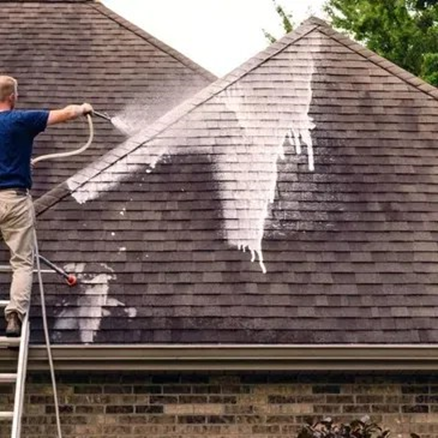
Professional roof cleaning removes algae and moss that thrive in humid weather.
A simple yearly checkup, ideally before hurricane season begins in June, is one of the easiest ways to protect your investment.
5. Gutters That Move Water Away From Your Home
Your roof and gutters work as a team. When gutters clog or sag, water backs up under the shingles, overflows onto fascia boards, and pools around your foundation. Proper gutter installation sends rainwater safely away from your walls, landscaping, and foundation. In a state that sees plenty of rainfall, that protection matters. Local roofing services can size gutters and downspouts for your roofline and make sure they direct water where it belongs.
Why Choose a Local Roofer Over an Out-of-Town Company?
After every major storm, crews from other states arrive offering quick deals. Some do good work, but others disappear once the job is paid for, leaving homeowners with no one to call. Choosing local roofing services gives you several advantages:
- Faster response. Nearby crews can reach your home quickly after a storm.
- Local knowledge. They understand Georgia weather patterns, neighborhood styles, and permit requirements.
- A local business depends on its reputation and word-of-mouth referrals.
- Ongoing support. You know where to find them for warranty questions or future maintenance.
- Community ties. Local roofers invest in the neighborhoods they serve.
Victory Roofing serves homeowners across the region, including Rincon, GA, Pooler, Richmond Hill, Brunswick, St. Simons Island, Statesboro, and nearby communities.
Do not wait for the next storm to find out how healthy your roof is. Reach out to the team at Victory Roofing to talk through your options, ask questions, and plan the right next step for your home.
Warning Signs Your Roof Needs Professional Attention
- Missing, cracked, curling, or blistered shingles
- Dark streaks, moss, or heavy granule buildup in your gutters
- Water stains on ceilings or walls
- Daylight visible through the roof boards in your attic
- Sagging areas on the roof
- Damaged, rusted, or loose flashing
- A roof that is approaching or past the typical lifespan of its material
- Rising energy bills caused by poor ventilation or insulation
If you notice any of these signs, schedule an inspection promptly. Waiting rarely makes the problem cheaper.
What to Do After a Georgia Storm
- Stay safe. Stay off the roof and away from downed power lines. Check for damage from the ground.
- Document the damage. Take clear photos of damaged roofing, gutters, and any interior leaks.
- Limit further damage. Move belongings away from leaks and use buckets to catch drips.
- Call a local roofer. A professional inspection identifies all of the damage, including problems you cannot see.
- Contact your insurance company. Review your policy, since some coastal policies carry separate wind or named-storm deductibles, and ask your roofer for supporting documentation.
- Approve repairs in writing. Get a written scope of work and estimate before any work begins.
How to Choose the Right Local Roofing Services
Not every roofer is the same. Before you sign a contract, look for:
- Proof of insurance and any required licensing
- Positive local reviews and an active Google Business Profile
- Clear, written estimates with no hidden surprises
- Real project photos and references from nearby homes
- Straightforward warranty terms
- Honest explanations of your options without pressure
- Information about financing if you need it
Frequently Asked Questions
How do local roofing services protect my home from Georgia weather?
They inspect your roof for storm and heat damage, repair leaks quickly, replace worn roofing with materials suited to the climate, and maintain your roof, gutters, and ventilation so your home stays protected through every season.
How often should I have my roof inspected in Georgia?
At least once a year and after any major storm. Scheduling an inspection before hurricane season starts in June gives you time to fix weak spots first.
How long does a roof last in Georgia?
It depends on the material, installation quality, ventilation, and maintenance. Heat and humidity can wear roofs faster than milder climates, so regular checkups help you get the most from your roof.
Should I repair or replace my roof?
Repair works well for localized damage on a roof that is otherwise in good shape. Replacement makes more sense when damage is widespread, leaks keep returning, or the roof is near the end of its life. An inspection will show which option fits.
Does roof cleaning really matter?
Yes. Algae, moss, and lichen hold moisture against shingles and can shorten their lifespan. Cleaning, along with regular maintenance, helps protect your roof in humid weather.
Why hire a local roofer instead of a storm-chasing company?
A local roofer knows the area, responds quickly, and stays accountable long after the job is finished. You also know where to find them if you need help later.
Protect Your Home With Trusted Local Roofing Services
Georgia weather will keep testing your roof, but you do not have to face it alone. From inspections and repairs to full replacements, maintenance, cleaning, and gutters, local roofing services give your home year-round protection from heat, humidity, rain, and wind.
Ready to protect your home? Contact Victory Roofing today to schedule your roof inspection and get honest answers from a team that knows Georgia roofs. Ask about financing options when you call.
