
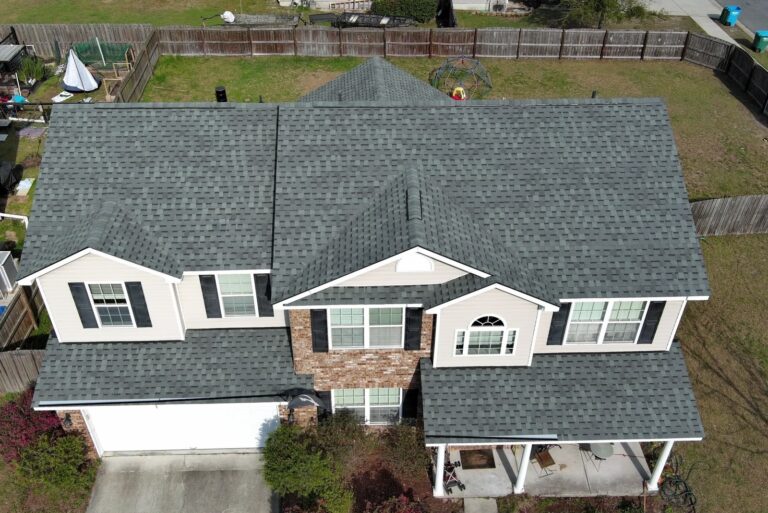
Few home problems feel as stressful as a roof problem. A brown stain on the ceiling after a thunderstorm, shingles scattered across the yard, or a roof streaked with dark patches can leave you wondering whether a quick fix will do or whether it is time for a brand new roof. If you live in Savannah, Pooler, Rincon, Richmond Hill, or anywhere along Coastal Georgia, this question comes up often, because our heat, humidity, and storm season are hard on every roof.
The good news is that the repair vs replace roof decision becomes much clearer once you know what to look for. This guide walks through the warning signs, the costs, the local weather factors, and a simple checklist that roofers use. And if you want certainty fast, a free inspection will give you a straight answer.
Repair vs Replace Roof
Choose repair when the damage is limited to one small area and the rest of the roof is in good shape, usually a roof under 15 years old with a few missing shingles, a worn seal, or damaged flashing. Choose replacement when the roof is near the end of its life, leaks keep coming back, damage appears on several slopes, or the repair bill is getting close to the price of a new roof. Asphalt shingle roofs typically last about 15 to 30 years depending on the shingle type, installation quality, and weather exposure, so age is the first thing to check. A free inspection from a licensed roofer is the only way to know for sure.
Get Your Free Inspection
Not sure which one your roof needs?
Request your free inspection
and get an honest recommendation with no pressure.
Why Roof Repair or Roof Replacement Is a Bigger Question in Coastal Georgia
Roofs along the Georgia coast age differently than roofs inland. Summer heat bakes shingles and wears away the protective granules on their surface. High humidity feeds algae and moss, which cause the black streaks you see on many Savannah roofs and can shorten shingle life if left alone. Afternoon thunderstorms push wind-driven rain under loose shingles and worn flashing. Hurricane season, which runs from June 1 through November 30, brings the risk of high winds that lift and tear shingles. Pine needles and oak leaves also collect in valleys and gutters and hold moisture against the roof.
All of this means small problems rarely stay small for long. A lifted shingle that looks harmless in spring can become a leak after the next heavy rain. That is why catching problems early, and knowing whether they call for a repair or a replacement, saves homeowners real money.
Signs Your Roof Needs a Repair
A roof repair makes sense when the problem is local and the roof’s overall condition is solid. Typical situations include:
- A few missing, cracked, or damaged shingles from a storm or a fallen branch
- A small leak traced to one clear source, such as damaged flashing around a chimney, vent, or skylight
- A worn pipe boot or dried-out sealant around a roof penetration
- Lifted or loose ridge cap shingles in one section
- Damage confined to a single slope
- A roof that is under roughly 10 to 15 years old and has been well maintained
Repairs are quicker and cost far less than a new roof, and they can add years of life to a healthy roof. The key word is healthy. Patching a roof that is already failing is like putting a new tire on a car with a bad engine: it helps for a while, but it does not solve the real problem.
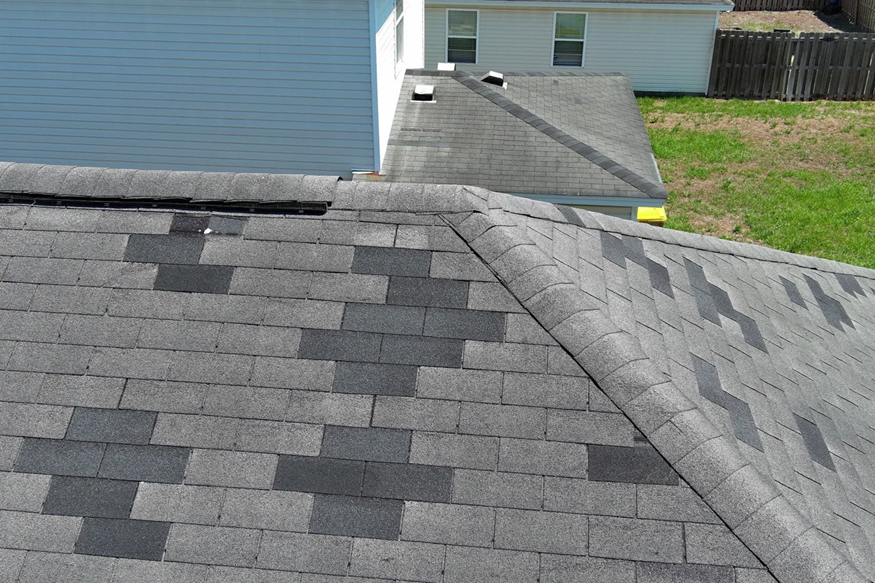
Targeted shingle repairs like these can restore a roof that is otherwise in good condition.
If water is already getting in, do not wait. A fast roof leak repair can stop damage before it spreads into insulation, drywall, and framing. The sooner a leak is found and sealed, the smaller the bill tends to be.
Signs Your Roof Needs a Full Replacement
Roof replacement becomes the smarter choice when problems are widespread or the roof has reached the end of its service life. Watch for these warning signs:
- Age: asphalt shingle roofs older than about 20 years are usually near the end of their useful life
- Curling, cupping, or buckling shingles across large areas of the roof
- Heavy granule loss, such as bald spots on shingles or piles of granules in your gutters
- Repeated leaks in different places, or the same leak returning after a repair
- A sagging roofline or soft spots, which can point to moisture damage in the decking underneath
- Widespread missing or storm-damaged shingles on multiple slopes
- Daylight visible through the roof boards when you look in the attic
Many roofers use a simple rule of thumb: if repairs would be needed on roughly 25 to 30 percent or more of the roof, or if you keep paying for repairs every year, replacement usually offers better value. A new roof also brings a fresh warranty, better weather protection, and improved curb appeal. Most residential replacements take about one to three days, depending on roof size, materials, and weather.
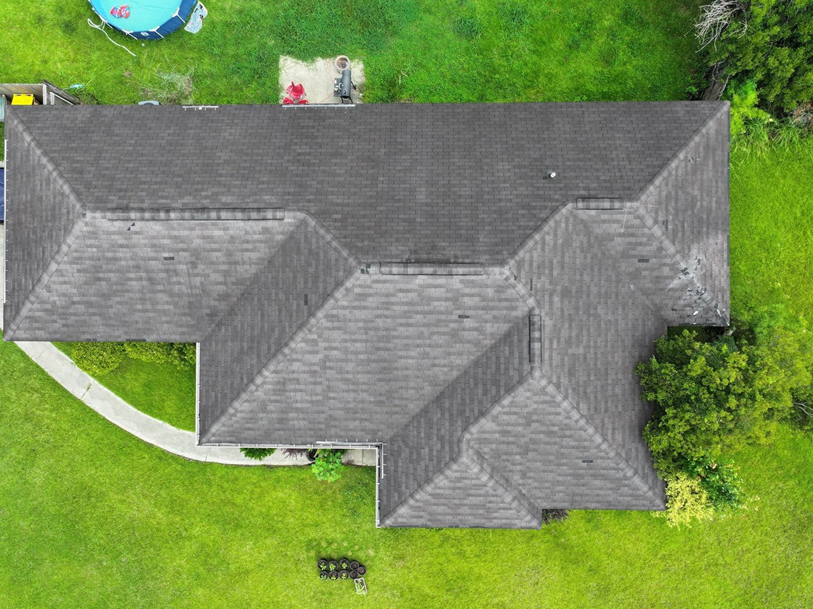
Dark staining, aging shingles, and scattered damage across several slopes often point toward replacement rather than a patch.
One note on algae: black streaks alone do not always mean you need a new roof. If the shingles underneath are still sound, professional soft washing can often restore the look and slow further damage. The inspection will tell you which situation you are in.
Repair vs Replace Roof at a Glance
| Factor | Roof Repair | Roof Replacement |
| Roof age | Usually under 10 to 15 years | Usually 20 years or more |
| Extent of damage | Small, in one area | Widespread, on multiple slopes |
| Leaks | One identifiable source | Repeated or multiple leaks |
| Upfront cost | Lower | Higher, but longer-lasting value |
| Timeline | Usually quick | Typically 1 to 3 days |
| Warranty | Limited to the repair work | New workmanship and manufacturer warranty options |
| Best for | Isolated damage on a healthy roof | An aging or failing roof |
Free Inspection for Savannah-Area Homeowners
Compare your roof to this table with a professional. Call or text
(912) 800-1544
to book your free inspection.
Storm Damage: When Weather Changes the Answer
After a hurricane, tropical storm, or severe thunderstorm, the repair-or-replace answer can change overnight. Storm damage repair is often enough when a handful of shingles are lifted or flashing is bent. But if wind has stripped large sections, a falling limb has punctured the decking, or the shingles are damaged across the entire roof, replacement may be necessary, and it may be covered by your homeowners insurance. Here is what to do after a storm:
- Stay safe and never climb onto a damaged roof yourself.
- Take clear photos of the damage from the ground and of any water stains inside your home.
- Cover openings with a tarp if you can do so safely, to keep more water out.
- Schedule a free inspection and review your policy, since many insurers expect prompt reporting.
- Keep every receipt and written estimate for your claim records.
Repair vs Replace Roof: How Much Does Each Cost?
Costs depend on roof size, pitch, materials, and the extent of the damage, so any honest number has to come from a free inspection and estimate. In general, repairs are priced by the job and cost a fraction of a new roof, while replacement is a larger investment that protects your home for decades. If you have paid for two or three repairs in recent years and the roof still leaks, that money could have gone toward a new roof with a warranty.
Worried about the upfront cost? Flexible roof financing options can spread the cost of a replacement into manageable payments. Whichever way you go, ask for an itemized written estimate so you can compare quotes fairly.
Your 10-Point Roof Decision Checklist
Use these questions to settle the repair vs replace roof debate for your own home, looking over the roof from the ground and the attic:
- How old is my roof?
- Is the damage in one spot, or on several slopes?
- Are shingles missing, cracked, curling, or lifting?
- Do I have water stains on my ceilings or walls?
- Do I see shingle granules collecting in my gutters?
- Does the roof sag, or does the deck feel soft in places?
- Has this roof already been repaired more than once?
- Did a recent storm cause damage?
- Is there moisture, mold, or poor ventilation in my attic?
- Do I plan to stay in this home long term, or sell soon?
If your roof is 20 years old or more and you answered yes to several of questions two through nine, replacement is likely the better investment. If the roof is younger and only one or two answers apply, a repair is probably all you need. Either way, a professional inspection confirms it.
Want a Second Opinion? Book a Free Inspection
Call or text (912) 800-1544 to schedule your free inspection. We serve Savannah, Pooler, Rincon, and nearby Coastal Georgia communities.
What to Expect From a Free Roof Inspection
A thorough inspection looks at much more than the shingles. A good roofer checks the flashing, vents, valleys, ridge, gutters, and drainage, and then looks at the attic for moisture, daylight, and ventilation problems. Aerial photos, like the one below, document the whole roof without walking on fragile shingles.
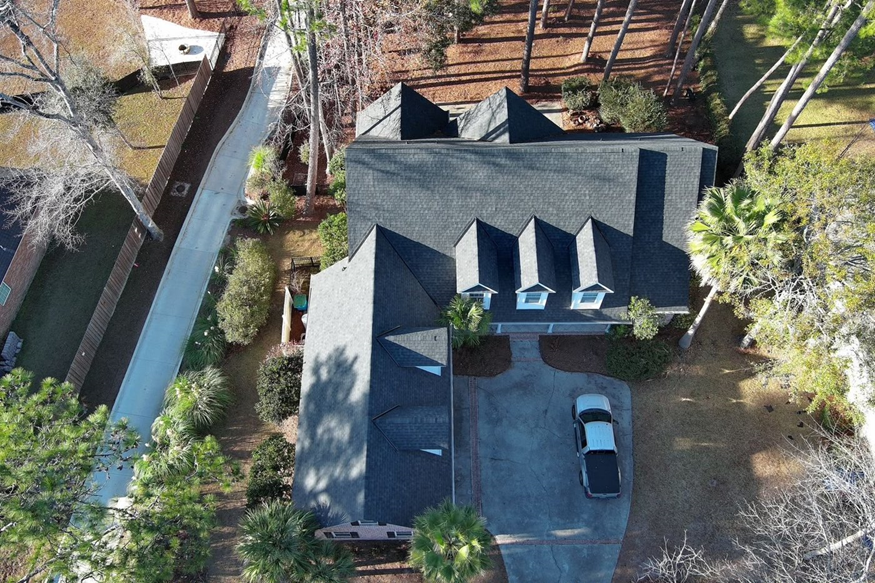
A completed roof replacement in Rincon, GA.
You should walk away with a clear explanation, photos, and a written estimate, plus an honest recommendation, even if it is only a small repair. Once your roof is in good shape, regular roof maintenance with a yearly inspection and a check after major storms helps you catch small issues early and get the most years out of your roof.
Common Mistakes to Avoid
- Waiting too long: small leaks turn into rotted decking, wet insulation, and ceiling damage
- Patching a failing roof over and over instead of planning a replacement
- Choosing the cheapest quote without checking that the contractor is licensed and insured
Frequently Asked Questions
Repair vs replace roof: how do I know which one I need?
Look at the roof’s age, the extent of the damage, and how often leaks return. Isolated damage on a roof under about 15 years old usually calls for a repair. An older roof with damage in several places, curling shingles, or repeated leaks usually calls for replacement. A free inspection gives you a definite answer.
How long does an asphalt shingle roof last in Georgia?
Most asphalt shingle roofs last about 15 to 30 years, depending on the shingle type and installation quality. Coastal heat, humidity, and storms can shorten that range, which is why regular inspections matter here.
Can I replace just part of my roof?
Sometimes. If the rest of the roof is in good condition, one slope or section can be replaced. On an older roof, though, new and old shingles age at different rates, so full replacement is often the better long-term value.
How long does a roof replacement take?
Most residential roof replacements take about one to three days, depending on the size of the roof, the materials, and the weather.
Does homeowners insurance cover roof repair or replacement?
Insurance often covers sudden storm damage but usually not normal wear and tear. Coverage depends on your policy, so review it and report storm damage promptly.
Are roof inspections really free?
Yes. Victory Roofing offers a free inspection for homeowners in Savannah, Pooler, Rincon, and surrounding areas, with an honest recommendation and no pressure.
The Bottom Line
The right answer to the repair vs replace roof question comes down to three things: the age of your roof, how widespread the damage is, and how often problems keep coming back. A healthy roof with isolated damage deserves a repair. An aging roof with widespread or recurring problems deserves a replacement. When you are unsure, a free inspection removes the guesswork and protects both your home and your budget.
Ready for Your Free Inspection?
Call or text (912) 800-1544, or visit our showroom at 82 Columbia Dr, Pooler, GA 31322 (Monday to Friday, 8am to 5pm, Saturday by appointment).
As a licensed, insured, family-owned roofing contractor in Pooler serving Savannah and Coastal Georgia, Victory Roofing is proud to help homeowners make the right call on every roof, with a free inspection, honest advice, quality craftsmanship, and a 4.9-star Google rating from the neighbors we serve.
